
Designing Efficient Directional Couplers for Signal Isolation and Coupling
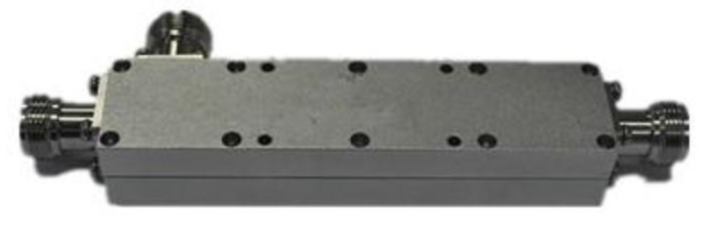
Designing efficient directional couplers for signal isolation and coupling in microwave and RF systems is a balancing act of performance, practicality, and application-specific constraints. These devices must extract or split signals with minimal loss, high directionality, and strong isolation between ports—all while fitting the system’s frequency, power, and size needs. Below, I’ll walk through the key design principles, trade-offs, and practical considerations, keeping it grounded and actionable.
Key Design Goals
Coupling Efficiency: Deliver a precise fraction of the input signal (e.g., 3 dB, 10 dB) to the coupled port without excessive loss in the main line.
High Isolation: Prevent unwanted signal leakage between the coupled and isolated ports (typically 20-40 dB isolation).
Directionality: Ensure the coupler distinguishes forward from reverse signals, minimizing crosstalk (directivity > 15-20 dB).
Low Insertion Loss: Keep the main signal path as intact as possible (ideally < 0.5 dB loss).
Bandwidth: Achieve the desired performance across the target frequency range (narrowband vs. broadband).
Design Principles and Techniques
Coupling Factor Control
Mechanism: Determined by the physical proximity and overlap of transmission lines (e.g., parallel lines, slots in waveguides).
How: Adjust gap spacing or line length. Closer lines = stronger coupling (e.g., 3 dB); wider gaps = weaker (e.g., 20 dB).
Math: Coupling C=10log(Pin/Pcoupled)C = 10 log(P_{ ext{in}}/P_{ ext{coupled}})C=10log(Pin/Pcoupled). For a 10 dB coupler, 10% of power is coupled, 90% passes through.
Trade-Off: Tight coupling reduces bandwidth; loose coupling sacrifices signal strength at the coupled port.
Isolation and Directivity
Mechanism: Achieved by phase cancellation or geometric symmetry. For example, in a hybrid coupler, signals at the isolated port destructively interfere.
How: Optimize line lengths to a quarter-wavelength (λ/4lambda/4λ/4) at the center frequency for phase alignment. In waveguides, slot placement matters.
Goal: Directivity D=10log(Pcoupled, forward/Pcoupled, reverse)D = 10 log(P_{ ext{coupled, forward}}/P_{ ext{coupled, reverse}})D=10log(Pcoupled, forward/Pcoupled, reverse). Higher values (20-30 dB) mean better isolation.
Trade-Off: Perfect isolation narrows the frequency range; broadband designs compromise slightly (15 dB directivity).
Transmission Line Type
Pros: Broadband, rugged.
Cons: Less precise coupling control.
Pros: High power (kW), low loss.
Cons: Bulky, costly.
Pros: Easy to fabricate, scalable for RF (1-20 GHz).
Cons: Lower power handling, susceptible to substrate losses.
Microstrip/Stripline: Compact, planar, ideal for PCBs. Use dielectric substrates (e.g., FR4, Rogers) to control impedance and coupling.
Waveguide: Hollow metal pipes for microwave (10-100 GHz). Slots or holes couple signals.
Coaxial: Inner/outer conductor pairs for RF.
Choice: Match the medium to the app—5G uses microstrip; radar leans on waveguide.
Phase Relationships
Quadrature (90°): For beamforming or balanced mixers, use branch-line or coupled-line designs.
180° (Rat-Race): For differential signals or power combining.
How: Set line lengths (λ/4lambda/4λ/4 or 3λ/43lambda/43λ/4) and port symmetry to enforce phase shifts.
Trade-Off: Phase accuracy degrades outside the design frequency.
Minimizing Losses
How: Use low-loss dielectrics (e.g., PTFE), high-conductivity metals (copper, gold plating), and avoid sharp bends.
Insertion Loss: Typically 0.1-0.5 dB for good designs; waveguide beats microstrip here.
Trade-Off: High isolation and directivity can increase main-line loss slightly.
Bandwidth Optimization
Narrowband: Tighter coupling and precise λ/4lambda/4λ/4 lengths (e.g., branch-line at 2.4 GHz for Wi-Fi).
Broadband: Multi-section coupling (e.g., tapered lines) or weaker coupling (10-20 dB) for 2-18 GHz range.
Trade-Off: Broadband sacrifices peak performance for versatility.
Practical Design Steps
Define Specs: Frequency (e.g., 5 GHz), coupling (10 dB), isolation (>25 dB), power (1 W vs. 1 kW).
Choose Topology: Microstrip for RF, waveguide for microwave, hybrid for equal split.
Simulate: Use tools like ADS, HFSS, or CST to model S-parameters (S21, S31, S41) and tweak dimensions.
Fabricate: Etch microstrip on a PCB or machine waveguide slots.
Test: Measure with a VNA for insertion loss, coupling, and directivity.
Real-World Examples
5G Base Station: A 10 dB microstrip coupler samples transmitter power, isolating the receiver path for monitoring.
Radar: A waveguide coupler with 20 dB coupling feeds a test port, handling 10 kW pulses with >30 dB isolation.
Satellite: A 3 dB hybrid splits power between two transponders, maintaining phase for redundancy.
Email us
Warning: Undefined variable $pronamepx in D:\wwwroot\www.resistorsupplies.com\moban\en_inc\ziliao.php on line 67
Fatal error: Uncaught TypeError: count(): Argument #1 ($value) must be of type Countable|array, null given in D:\wwwroot\www.resistorsupplies.com\moban\en_inc\ziliao.php:67 Stack trace: #0 D:\wwwroot\www.resistorsupplies.com\ziliao.php(146): include() #1 {main} thrown in D:\wwwroot\www.resistorsupplies.com\moban\en_inc\ziliao.php on line 67