
What Are Rod Choke Inductors?
What Are Rod Choke Inductors?
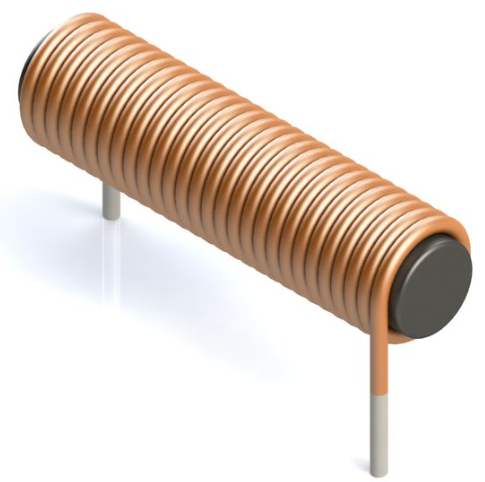
First, a quick refresher: Rod choke inductors are a type of inductor with a coil of wire wound around a straight, rod-shaped core—often made of ferrite or iron powder. They’re used to "choke" or block high-frequency alternating current (AC) while allowing direct current (DC) or lower-frequency AC to pass. They’re simpler than toroidal (donut-shaped) inductors and are common in RF circuits, power supplies, and noise suppression applications.
Likely Areas of Development
Given the rapid evolution of electronics, here are some plausible changes and advancements we might see in rod choke inductors:
Material Improvements:
Core Materials: Advances in ferrite or composite materials could boost permeability or reduce losses at higher frequencies. For instance, nanotechnology might yield cores with better magnetic properties, making rod chokes more efficient.
Thermal Management: New core materials or coatings could handle higher temperatures, crucial as devices get smaller and power demands increase.
Miniaturization:
As electronics shrink (think wearables, IoT devices, or 5G hardware), rod choke inductors might be redesigned for smaller footprints. This could involve tighter winding techniques or hybrid designs that blend rod and surface-mount tech.
Expect thinner, more compact rods that still maintain high inductance.
Higher Frequency Performance:
With the rise of high-frequency applications (e.g., 5G, radar, or next-gen RF systems), rod chokes might evolve to handle broader frequency ranges or sharper cutoffs. This could mean refined winding patterns or cores optimized for GHz ranges.
Efficiency and Power Handling:
New designs might focus on reducing parasitic capacitance and resistance, improving energy efficiency. This is key for power electronics in electric vehicles or renewable energy systems.
Higher current-handling capacity could come from thicker wire or multi-layer windings.
Smart Integration:
We might see rod chokes integrated into "smart" circuits with adaptive properties—like variable inductance controlled by external signals—though this is more speculative and complex for a simple rod design.
Manufacturing Advances:
Automation and precision winding (e.g., via CNC or 3D printing) could lower costs and improve consistency. Customizable rod chokes for specific applications might become more common.
Current Context and Trends
Rod chokes are already a staple in RF and power filtering, but they’re less glamorous than toroidal or multilayer inductors. Recent industry focus has been on surface-mount and common-mode chokes for high-speed data lines (e.g., USB, HDMI). However, rod designs remain relevant for their simplicity and cost-effectiveness. Any "new changes" will likely build on these strengths rather than reinvent the wheel.
Critical Take
The establishment narrative often hypes flashy tech like AI or quantum computing, but passive components like inductors quietly underpin everything. Rod choke advancements might not grab headlines, but incremental improvements could have outsized impacts in niche fields like ham radio, automotive electronics, or industrial power systems. That said, without concrete leaks or patents to point to, this is educated guesswork—don’t take it as gospel!
If you’d like, I can search the web or X for the latest buzz on inductor tech to see if anything specific about rod chokes has popped up recently. Want me to do that? Or if you’ve got a particular angle in mind (e.g., a specific application or timeframe), let me know, and I’ll tailor this further!
Email us
Warning: Undefined variable $pronamepx in D:\wwwroot\www.resistorsupplies.com\moban\en_inc\ziliao.php on line 67
Fatal error: Uncaught TypeError: count(): Argument #1 ($value) must be of type Countable|array, null given in D:\wwwroot\www.resistorsupplies.com\moban\en_inc\ziliao.php:67 Stack trace: #0 D:\wwwroot\www.resistorsupplies.com\ziliao.php(146): include() #1 {main} thrown in D:\wwwroot\www.resistorsupplies.com\moban\en_inc\ziliao.php on line 67