
Applications and Types of Directional Couplers in Communication Networks
Directional couplers are essential components in communication networks, widely used for their ability to split, combine, or sample signals while maintaining directionality. Below, I’ll outline their applications and types, providing a concise yet comprehensive overview based on their role in modern systems.
Applications of Directional Couplers in Communication Networks
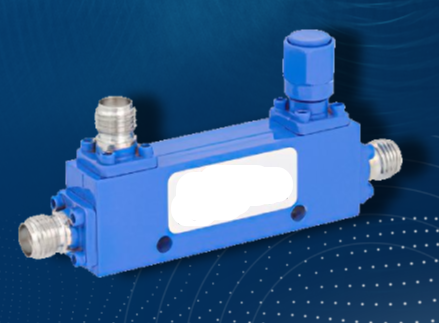
Signal Monitoring and Measurement
Directional couplers are used to sample a portion of the signal in a transmission line without interrupting the main flow. This is critical in network diagnostics, such as measuring power levels, signal integrity, or detecting faults in RF and microwave systems like cellular base stations or satellite communications.Power Division and Distribution
They split an input signal into multiple outputs with a defined coupling ratio (e.g., 3 dB, 10 dB). This is vital in feeding multiple antennas in phased array systems or distributing signals in distributed antenna systems (DAS) for wireless networks.Mixing and Combining Signals
In reverse, they can combine signals from different sources, such as in multiplexing applications or when aggregating signals in fiber-optic networks or hybrid RF systems.Impedance Matching and Tuning
By sampling reflected signals, directional couplers help adjust impedance in amplifiers or transmitters, optimizing performance in high-frequency communication systems like radar or 5G networks.Beamforming and Antenna Systems
In advanced networks (e.g., 5G or satellite), they enable precise control of signal phases and amplitudes, supporting beamforming techniques for directional signal transmission.Test and Calibration
Labs and field engineers use them in spectrum analyzers or vector network analyzers (VNAs) to calibrate equipment or test system performance under real-world conditions.
Types of Directional Couplers
Branch-Line Couplers
Structure: Composed of four ports with two parallel transmission lines connected by branch lines.
Characteristics: Typically a 3 dB (equal split) coupler with 90° phase difference between outputs.
Use: Common in microwave integrated circuits (MICs) and phased array antennas.
Coupled-Line Couplers
Structure: Two parallel transmission lines placed close together, allowing electromagnetic coupling.
Characteristics: Adjustable coupling factor (e.g., 10 dB, 20 dB); operates over a wide bandwidth.
Use: RF signal sampling in cellular networks or broadband systems.
Hybrid Couplers
Structure: Four-port devices, often 3 dB, with 90° or 180° phase shifts (e.g., quadrature or rat-race couplers).
Characteristics: Equal power division with high isolation between ports.
Use: Balanced amplifiers, mixers, or antenna feed networks in wireless communications.
Stripline/Microstrip Couplers
Structure: Built using planar transmission lines on a dielectric substrate.
Characteristics: Compact, cost-effective, and easy to integrate into PCBs.
Use: Widely used in compact RF modules for Wi-Fi, IoT, or satellite transceivers.
Waveguide Couplers
Structure: Hollow metallic waveguides with slots or apertures for coupling.
Characteristics: High power handling and low loss, suited for microwave frequencies.
Use: Radar systems, satellite uplinks, and high-power microwave networks.
Optical Directional Couplers
Structure: Fiber-optic or planar waveguide-based, splitting light signals.
Characteristics: Low insertion loss, used in wavelength-division multiplexing (WDM).
Use: Core component in fiber-optic communication networks like FTTH (Fiber to the Home).
Broader Context and Critical Notes
Directional couplers vary by frequency range (RF, microwave, optical), coupling factor (weak: 20 dB, strong: 3 dB), and medium (coaxial, waveguide, optical fiber). Their design trade-offs—size vs. bandwidth, power handling vs. loss—depend on the application. For instance, 5G networks lean on compact microstrip couplers for base stations, while satellite systems favor waveguide types for durability. The establishment often touts newer designs as universally superior, but older types like branch-line still hold up in niche, cost-sensitive uses—don’t overlook their practicality.
Email us
Warning: Undefined variable $pronamepx in D:\wwwroot\www.resistorsupplies.com\moban\en_inc\ziliao.php on line 67
Fatal error: Uncaught TypeError: count(): Argument #1 ($value) must be of type Countable|array, null given in D:\wwwroot\www.resistorsupplies.com\moban\en_inc\ziliao.php:67 Stack trace: #0 D:\wwwroot\www.resistorsupplies.com\ziliao.php(146): include() #1 {main} thrown in D:\wwwroot\www.resistorsupplies.com\moban\en_inc\ziliao.php on line 67