
What is Balun Transformers?
A balun transformer (or simply a "balun") is a specific type of transformer designed to convert between balanced and unbalanced electrical signals, as I mentioned earlier. The term "transformer" emphasizes its role in impedance matching and signal conversion, which is often achieved using coiled wires or magnetic cores—classic transformer traits.
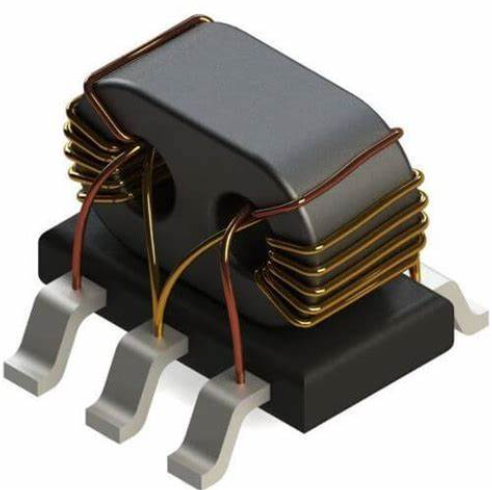
How It Works
Structure: A balun transformer typically consists of windings (coils of wire) around a core (often ferrite or air). The way the windings are configured determines the impedance transformation ratio (e.g., 1:1, 4:1, 9:1).
Function: It takes an unbalanced input (like from a coaxial cable, where the shield is grounded) and outputs a balanced signal (where two lines carry equal but opposite voltages), or vice versa. It can also step impedance up or down to match the connected systems.
Purpose: Beyond just balancing, it suppresses "common-mode currents"—unwanted currents that flow equally on both conductors of an unbalanced line, which can cause interference or signal degradation.
Types of Balun Transformers
1:1 Balun: Matches impedance without changing it (e.g., 50 ohms unbalanced to 50 ohms balanced). Common in dipole antennas.
4:1 Balun: Transforms impedance (e.g., 200 ohms balanced to 50 ohms unbalanced). Used with folded dipoles or certain loop antennas.
9:1 Balun: Often used in long-wire antennas to match high-impedance loads (e.g., 450 ohms) to a 50-ohm coax.
Current Balun vs. Voltage Balun:
Current baluns force equal and opposite currents on the balanced side (better for rejecting common-mode noise).
Voltage baluns force equal and opposite voltages (simpler but less effective at noise rejection).
Applications
Antennas: Connecting coax cables to balanced antennas (e.g., dipoles, Yagis).
Audio: In some high-end audio equipment to eliminate ground loops.
RF Systems: In transmitters, receivers, or ham radio setups to optimize signal transfer.
Example
Imagine you’ve got a 50-ohm coaxial cable from your radio and a dipole antenna with a 50-ohm impedance. A 1:1 balun transformer ensures the signal moves smoothly from the coax (unbalanced) to the dipole (balanced) without reflections or losses.
Does this align with what you were curious about? If you meant something more specific by "Balun Transformers," like a brand or a unique design, let me know, and I’ll dig deeper!
Email us
Warning: Undefined variable $pronamepx in D:\wwwroot\www.resistorsupplies.com\moban\en_inc\ziliao.php on line 67
Fatal error: Uncaught TypeError: count(): Argument #1 ($value) must be of type Countable|array, null given in D:\wwwroot\www.resistorsupplies.com\moban\en_inc\ziliao.php:67 Stack trace: #0 D:\wwwroot\www.resistorsupplies.com\ziliao.php(146): include() #1 {main} thrown in D:\wwwroot\www.resistorsupplies.com\moban\en_inc\ziliao.php on line 67