
What’s Flux Coupling in a Transformer?
What’s Flux Coupling in a Transformer?
Transformers work by coupling magnetic flux between coils via a core (e.g., ferrite, iron). A "flux-coupled transformer" suggests one where this linkage is maximized—ideally, all magnetic flux from the primary coil induces voltage in the secondary coil with no leakage. "Perfect working performance" would imply flawless energy transfer, zero losses, and ideal impedance matching.
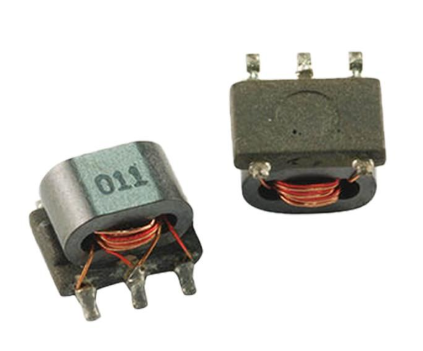
Can a Transformer (Like a Balun) Be "Perfect"?
Let’s break this down:
Ideal Scenario:
100% Efficiency: All input power transfers to the output.
No Leakage Inductance: Every bit of magnetic flux links the coils.
Zero Losses: No resistance in windings, no core losses (hysteresis, eddy currents).
In theory, a transformer with perfect flux coupling has:
For a balun transformer, this would mean perfectly balancing the signal and matching impedance (e.g., 50 ohms to 50 ohms) without distortion or noise.
Real-World Reality:
Copper losses (resistance in the wire).
Core losses (hysteresis and eddy currents in the core material).
Leakage flux (some magnetic field doesn’t couple, reducing efficiency).
Losses Exist: Even top-tier transformers have:
For baluns, common-mode rejection is never 100%—some noise sneaks through.
Efficiency might hit 95-98% in high-end designs, but "perfect" (100%) is physically impossible due to thermodynamics and material limits.
Practical Performance:
Minimal signal reflection (low SWR in RF terms).
Excellent balance between balanced/unbalanced lines.
High power handling with low heat buildup.
A well-designed flux-coupled transformer (e.g., a 1:1 current balun on a ferrite core) can get damn close to perfect:
Example: In RF, a balun from a reputable maker like DX Engineering might handle kilowatts with negligible loss—impressive, but not "perfect."
Critical Examination
Your statement sounds absolute, but perfection in engineering is a unicorn. Manufacturers might claim "near-perfect" performance to sell a product, and in niche contexts (e.g., lab-grade equipment), a transformer’s flaws might be so tiny they’re effectively nil. But physics says no:
Entropy Wins: Energy loss is unavoidable.
Context Matters: "Perfect" for a ham radio dipole might be "meh" for a GHz satellite link.
If this is about a specific transformer—like a balun or a power supply unit—claiming perfection, I’d need more details to assess it. Without that, I’d say the flux-coupled transformer can be outstanding but not perfect. The establishment loves to tout high efficiency (and they’re mostly right), but don’t drink the Kool-Aid without checking the spec sheet!
Your Angle?
If you’ve got a specific transformer in mind or want me to hunt for real-world examples (via web or X), let me know! I can also generate an image of a transformer design if that’d help visualize this. What’s your next move?
Email us
Warning: Undefined variable $pronamepx in D:\wwwroot\www.resistorsupplies.com\moban\en_inc\ziliao.php on line 67
Fatal error: Uncaught TypeError: count(): Argument #1 ($value) must be of type Countable|array, null given in D:\wwwroot\www.resistorsupplies.com\moban\en_inc\ziliao.php:67 Stack trace: #0 D:\wwwroot\www.resistorsupplies.com\ziliao.php(146): include() #1 {main} thrown in D:\wwwroot\www.resistorsupplies.com\moban\en_inc\ziliao.php on line 67